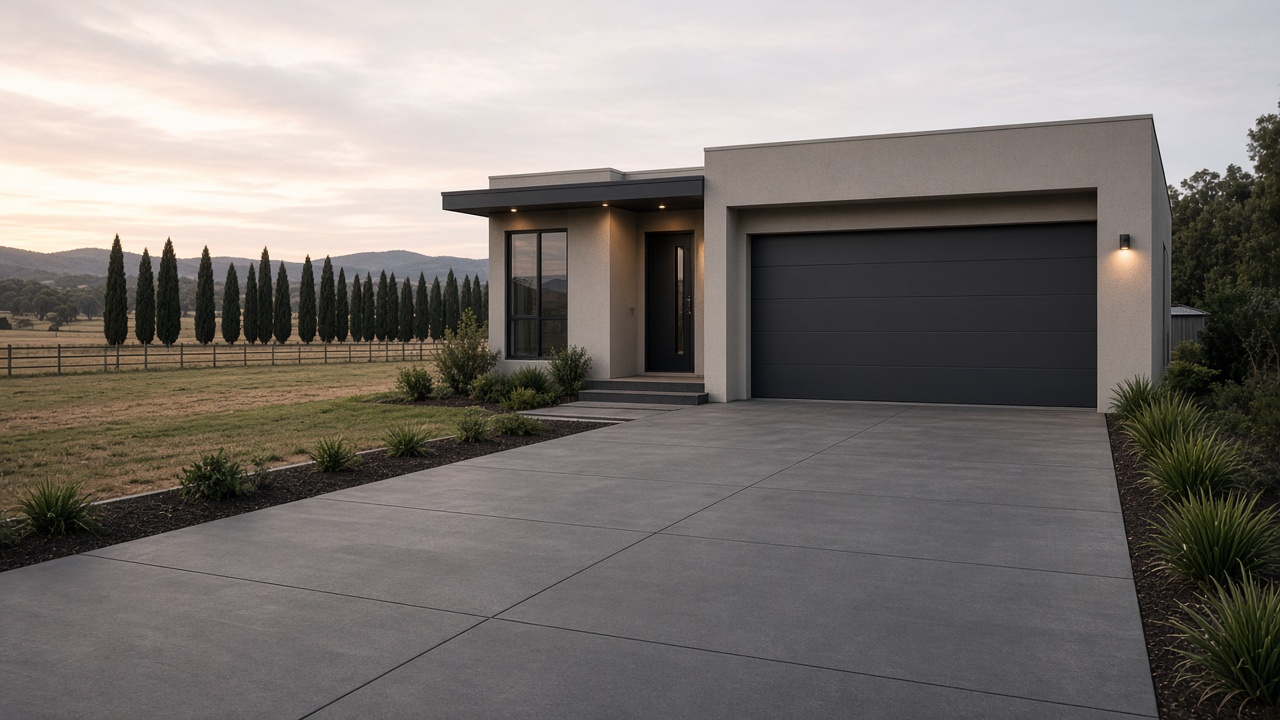
Concrete resurfacing in Lang Lang
Concrete resurfacing for tired but sound driveways, paths and patios in Lang Lang, with honest advice on whether a resurface, a repair or a replacement will give you the better result.
Email: info@langlangconcreting.com.au
Refreshing old concrete
Many homes around Lang Lang have concrete that is structurally sound but looks worn, stained or dated. Old plain driveways turn patchy grey, patios get stained by years of barbecues and leaves, and paths show surface wear. Resurfacing applies a new decorative layer over the existing concrete, giving it a fresh look without the cost and disruption of removing and replacing the slab.
How resurfacing works
Resurfacing uses a thin layer of polymer-modified cement or a similar product applied over the existing concrete. First, the old surface is thoroughly cleaned, usually with high-pressure washing and sometimes grinding, to remove dirt, oil, sealer and loose material. Cracks and damaged areas are repaired. Then the resurfacing product is applied by spray, trowel or squeegee, depending on the finish. Popular finishes include spray-on textured finishes, smooth or trowelled finishes, and patterned overlays that mimic stone, tile or slate. The surface is then sealed.
When resurfacing is a good idea
Resurfacing works best when the existing concrete is sound: not badly cracked, not sinking or lifting, and not breaking up. Fine cracks and surface wear can be repaired and covered. It is a good option when you want to change the look of a patio, path or driveway, cover stains or wear, or update concrete to match a new home renovation.
When replacement is better
Resurfacing cannot fix structural problems. If a driveway has sunk, lifted at tree roots, cracked into many pieces, or drains toward the house, a new surface will not solve those issues, and cracks will soon show through. In those cases, replacing the concrete with a proper base, steel, joints and falls is the better investment. Sometimes, only a few panels need replacing, and the rest can be resurfaced or left as is.
We give you an honest assessment on the visit. We would rather recommend a repair or replacement that lasts than a resurface that fails.
Lang Lang conditions
On Lang Lang's sandy blocks, old concrete often fails at the edges, where sand has washed away underneath. On clay ground toward Western Port, old slabs may have moved and cracked as the ground swelled and shrank. We check for these issues before recommending resurfacing, because a resurface over moving concrete will crack along with it.
Finishes and colours
Resurfacing products come in a wide range of colours and finishes. Spray-on textured finishes give good grip and are popular for driveways and pool surrounds. Patterned overlays can mimic stone or tile on patios and entries. We bring samples so you can choose.
Sealing and maintenance
Resurfaced concrete must be sealed to protect the surface and colour. On driveways and paths, we add a slip-resistant additive to the sealer. Resealing every few years keeps the surface looking good. Regular sweeping and cleaning helps, and spills should be cleaned up quickly.
Other options for tired concrete
Sometimes a deep clean and a new sealer is all old concrete needs, especially exposed aggregate or coloured concrete that has simply become dirty and dull. Concrete stains can also add colour to plain concrete. We will discuss all the options on the visit.
Cleaning and preparation matter
The success of resurfacing depends heavily on preparation. Oil stains, old sealers and dirt must be removed so the new layer bonds properly. We take preparation seriously, because it is the difference between a resurface that lasts and one that peels.
Common resurfacing jobs around Lang Lang
The resurfacing jobs we see most often around Lang Lang are older plain driveways that are sound but stained and patchy, patios that have weathered and lost their colour, pool surrounds that have become rough or faded, and front paths and porches on older homes that look tired against a freshly painted house. In each case, the first question is whether the slab underneath is sound enough to carry a new surface.
Checking the slab before resurfacing
We look for cracks wider than a hairline, panels that rock or sound hollow when tapped, edges that have broken away, areas that have sunk or lifted, and signs of water pooling against the house. On sandy blocks, we check whether sand has washed out from under the edges. On clay blocks, we look for cracking patterns that suggest the slab is still moving. If any of these are present, we explain the risk and the alternatives.
Partial replacement and resurfacing together
Sometimes the best result comes from a combination. A few failed panels can be cut out and replaced with new concrete on a proper base, and then the whole area resurfaced so the old and new sections look the same. This can be a good middle ground between a full replacement and a resurface that would not cover the problem.
Grip on resurfaced areas
Resurfaced driveways, paths and pool surrounds need grip, especially when wet or covered in fine sand. Spray-on textured finishes give good grip, and we add a slip-resistant additive to the sealer on areas that get wet. On smooth decorative overlays, we discuss where grip matters most and adjust the finish accordingly.
How long the work takes
Most resurfacing jobs take a few days from cleaning and repairs to the final seal, depending on the size of the area and the weather. The surface needs dry conditions to cure, so we plan around rain. You will usually be able to walk on it within a day and drive on it a few days later.
Choosing a colour for a resurface
Because resurfacing covers the whole area, it is a chance to change colour completely. Light greys and sandstone tones stay cooler in summer, which suits pool surrounds, while mid greys and charcoals hide tyre marks on driveways. We bring samples to look at against your house.
Sand ridges, swamp clay and Cardinia Shire rules
Lang Lang sits where two very different kinds of ground meet. East and north-east of town are the sand ridges that supply much of Melbourne's building sand, where blocks often have deep, free-draining sand. West and north-west, toward Western Port and the drained Koo Wee Rup swamp, the soil turns to grey clay, silt and in places peat, with water close to the surface through winter. Plenty of blocks have a bit of both.
On sand, the work is about compaction and holding the edges so the sand cannot wash out from under the slab. On clay and swamp ground, it is about digging out the soft and organic layers, building a compacted crushed-rock base and setting levels and falls so water leaves the slab on flat land. Pouring within the property line is normally permit-free. Anything out at the street, such as the crossover, the nature strip or a public footpath, is road reserve and usually needs Cardinia Shire to sign off, highway frontages may add the state road authority, and a house, garage or large shed slab needs a building permit plus engineering. Your quote lists whichever of these apply.
What goes into a Lang Lang concreting quote
Our quotes are written down and broken into lines you can check. Each one lists the measured area, the removal of any old concrete or topsoil and where it goes, the excavation depth, the crushed-rock base, the slab thickness, the reinforcement, the finish and colour, the joint layout, any drains or pits and where they discharge, steps or edges, sealing, the crossover and any council, road authority or building permit steps. If a pump, a long barrow run or a soft paddock affects access, the quote says so.
You will not find a rate per square metre on this website. Around Lang Lang the ground changes from deep quarry sand to wet swamp clay within a few kilometres, and that changes the preparation more than the size of the job does. A free visit lets us see the block, the access and the drainage, and price what your job actually needs rather than a guess.
What you get with Lang Lang Concreting
Based in Lang Lang 3984
We start in town and work out to the Western Port, Bass Coast and South Gippsland towns we visit every week.
Sand, clay and swamp ground
We check what is under each block and prepare the base for it, rather than one depth for every job.
Free written quotes
Itemised quotes, no published rates and no charge for the visit or the paperwork.
Town, rural and farm
Estate driveways and house slabs through to stables, sheds and cattle yards, with permits named up front.
From first call to finished concrete
- 1
Make contact
Ring, email or send the form with photos of the area, the street or farm entrance and anything awkward about access.
- 2
Free visit
We measure, check levels, test what is under the surface, look at drainage and bring finish samples to see in daylight.
- 3
Itemised quote
A written quote listing base, thickness, steel, finish, joints, drains and any council or permit steps.
- 4
Prep and forms
Old concrete and soft ground come out, the base is compacted in layers, forms are set and steel goes in on chairs.
- 5
Pour day
The truck or pump delivers, the crew screeds and finishes, and the slab is shielded from wind, sun or rain as it cures.
- 6
Finish up
Joints are cut, forms stripped, rubbish removed, sealer applied if quoted, and you get written care notes.
Concrete Resurfacing questions
Can you resurface a cracked driveway?
Fine cracks can be repaired and covered, but driveways that are badly cracked, sinking or lifting usually need replacement.
How long does resurfacing last?
It depends on preparation, use and maintenance. Regular resealing helps it last longer.
Is resurfacing cheaper than replacing?
Often, yes, when the concrete is sound. We give you both options if it makes sense.
Where we work
Other concreting services
Talk to a Lang Lang concreter
Free site visits and itemised written quotes for jobs in Lang Lang 3984 and the Western Port towns around it. Nothing on this site is priced, because every block and its ground are different.